 With appropriate apologies yet again to Isaac Asimov, I am proud to announce I have actually passed one of the milestones of a test site. I completely destroyed my site and backup in an attempt to make changes in a new and different way and had to rebuild from the unlikeliest of all places, the existing rss feed in my Google reader. And for those of you who have taken my feed, while I am extremely happy I had that history from which to draw, you will see double entries for everything before this post, as it is my first original post after the rebuild.
Now, back to your original programming…
 I’m going to date myself.
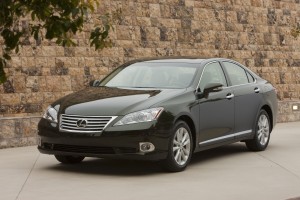 That lyric from “Big Yellow Taxi” kept running through my mind on a gorgeous Friday morning not too long ago. I had the opportunity to have some fun, but with a purpose driving a few different types of vehicles at the Lexus Safety Experience here in Chicago.
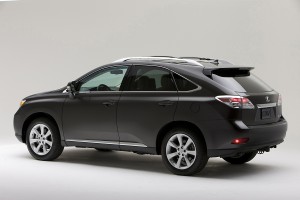 Next up was the RX 350 and Vehicle Stability control (VSC) and Traction Control (TRAC). Basically, the TRAC system monitors and controls wheel slippage (spinning) by reducing the throttle and maybe even applying the brakes to the wheel that’s slipping. To show its effect, there was a tarp that was covered with soapy water and I was asked to floor it once I drove the RX 350 on the tarp. The first RX 350 with TRAC disabled was like flooring it after a foot and a half of fallen snow on a Chicago side street before the snowplow could get there. You got it, going nowhere, fast. The second with TRAC enabled, a little slippage at first, but not half that of the first RX 350. I could actually see getting down a snow covered Chicago street in that vehicle with little problems.
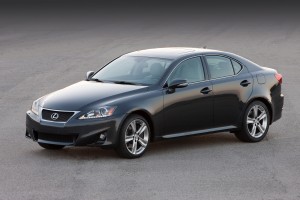 Last in my rotation was the Smart Stop Technology course. This situation was a little different. This was the only example where the first car, a 2010 IS 250 didn’t have this safety feature at all (the IS 350 is pictured here). The second car. also a 2010 IS 250 had Smart Stop technology. Why the difference? it was in 2010 that Lexus implemented the feature as a standard on all its models, the first manufacturer to do so. What this does is if the accelerator is open more than 1/3, the car is going faster than 5 mph and the brakes are applied firmly, the throttle is cut automatically, speaking directly to the unintended acceleration issue. It was designed to simulate a stuck throttle and thisproved to be the most difficult for a lot of people to do because you had to drive with both feet: one on the gas pedal and the other on the brakes. It was pretty fun for me too.